Hyderabad Industrial Area refers to the broad network of industrial estates, manufacturing clusters and business zones located across Hyderabad and its surrounding areas in Telangana. Hyderabad is one of South India’s important industrial and commercial centres, with a strong presence of pharmaceuticals, biotechnology, engineering, electronics, automobiles, food processing, plastics, chemicals and logistics.
The city’s industrial development is spread across locations such as Jeedimetla, Balanagar, Kukatpally, Nacharam, Uppal, Sanathnagar, Patancheru, Kattedan, Cherlapally and other industrial zones around the metropolitan region. These areas provide businesses with access to transport infrastructure, skilled workers, suppliers, warehouses and a large urban market.
The combination of established industrial clusters, highway connectivity and proximity to Hyderabad’s commercial districts makes the Hyderabad industrial area attractive for manufacturers, wholesalers, logistics companies, MSMEs and investors.
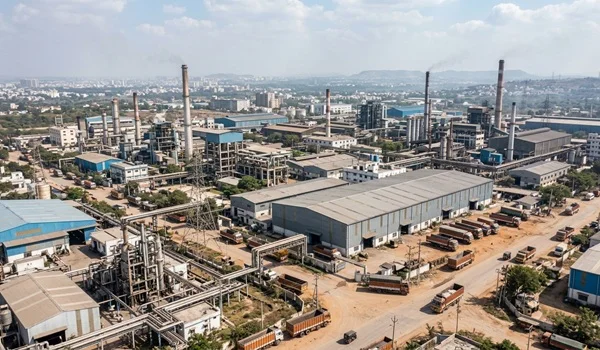
Hyderabad Industrial Area Location & Address
Hyderabad has several industrial areas rather than one single industrial estate. The exact location depends on the industrial cluster or business district.
| Location Detail | Information |
| City | Hyderabad |
| State | Telangana |
| Region | South India |
| Major Industrial Areas | Jeedimetla, Balanagar, Sanathnagar, Nacharam, Uppal, Kattedan, Cherlapally, Patancheru and surrounding areas |
| Major Highways | NH-44, NH-65 and other regional corridors |
| Nearby Business Areas | Secunderabad, Kukatpally, Hitech City, Gachibowli and Uppal |
| PIN Code | Varies by industrial area |
Because Hyderabad has many separate industrial zones, the PIN code, nearest transport facility and road connectivity depend on the exact location.
How to Reach Hyderabad Industrial Areas
By Metro
Hyderabad Metro provides useful connectivity to several commercial and residential parts of the city. However, not every industrial estate has a metro station directly at its entrance.
Depending on the destination, visitors can use the metro and continue by auto, taxi, bus or other road transport.
Industrial areas around Balanagar, Kukatpally and nearby parts of the city can benefit from relatively convenient access to the wider metro network.
By Road
Road transport is one of the main ways to reach Hyderabad’s industrial zones.
Major road corridors connect the city with surrounding industrial locations and neighbouring states. Important routes include NH-44 and NH-65, along with the Outer Ring Road and several major arterial roads.
Road connectivity is especially important for factories and warehouses because heavy vehicles need regular access to suppliers, customers and distribution centres.
By Bus
TSRTC bus services and local city transport connect industrial areas with residential and commercial parts of Hyderabad.
Employees commonly use buses, shared transport, autos, two-wheelers and private vehicles for daily commuting.
Bus connectivity varies by industrial estate, with better services generally available in established urban locations.
By Railway
Hyderabad and Secunderabad have an extensive railway network.
Major railway stations such as Secunderabad, Hyderabad Deccan and other suburban stations provide access to different parts of the metropolitan region.
The most convenient railway station depends on the industrial location and the direction from which a visitor is travelling.
By Airport
Rajiv Gandhi International Airport is the primary airport serving Hyderabad.
The airport is located in Shamshabad and is connected to the city through major road corridors. Businesses involved in pharmaceuticals, electronics, exports, logistics and high-value manufacturing can benefit from airport connectivity.
Nearest Transport Facilities
| Facility | Information |
| Metro | Hyderabad Metro, depending on industrial zone |
| Major Railway Stations | Secunderabad, Hyderabad Deccan and other city stations |
| Airport | Rajiv Gandhi International Airport |
| Major Roads | NH-44, NH-65, ORR and city arterial roads |
| Local Transport | Buses, autos, taxis and private vehicles |
| Freight Connectivity | Road and railway network |
Exact distances should be checked according to the specific industrial estate or factory address.
Major Industries in Hyderabad Industrial Area
Hyderabad has a highly diversified industrial economy. Different industrial clusters specialise in different types of manufacturing and services.
Major industries include:
- Pharmaceuticals
- Biotechnology
- Chemical manufacturing
- Automobile components
- Engineering
- Electrical equipment
- Electronics
- Plastic products
- Food processing
- Packaging
- Textiles
- Garments
- Machinery
- Medical equipment
- Defence-related manufacturing
- Aerospace
- Logistics
- Warehousing
- Construction materials
The Hyderabad region is particularly recognised for its pharmaceutical and life-sciences ecosystem. At the same time, traditional industrial estates continue to support engineering, fabrication, electrical, plastic and general manufacturing businesses.
Top Companies & Manufacturing Units
Hyderabad’s industrial belt includes large companies, established manufacturing groups and a large number of MSMEs.
Depending on the industrial area, businesses may include:
- Pharmaceutical manufacturers
- Chemical companies
- Engineering companies
- Automobile component manufacturers
- Electrical equipment producers
- Electronics manufacturers
- Packaging units
- Food-processing companies
- Plastic manufacturers
- Machinery manufacturers
- Warehousing operators
- Logistics companies
The city also has a strong life-sciences and pharmaceutical ecosystem, with major companies operating in Hyderabad and surrounding industrial and biotechnology clusters.
Company locations can change due to expansion, relocation or consolidation. Businesses looking for a particular manufacturer should confirm the current factory or office address before visiting.
Warehouses, Industrial Sheds & Commercial Spaces
Hyderabad has a large supply of industrial and logistics properties spread across its established industrial belts and outer growth corridors.
Depending on the location, businesses can find:
- Industrial plots
- Factory buildings
- Industrial sheds
- Warehouses
- Godowns
- Logistics centres
- Storage facilities
- Commercial-industrial buildings
- Manufacturing units
- Distribution centres
Locations close to major highways and the Outer Ring Road are particularly useful for logistics and warehousing companies.
Property rents and sale prices vary significantly according to location, plot size, building condition, road frontage, utility availability and demand.
Businesses should compare current market rates before purchasing or leasing an industrial property.
Infrastructure & Facilities
Roads and Transport
Established industrial areas generally have road access to Hyderabad’s major transport corridors.
However, traffic conditions can vary significantly, particularly during peak hours. Companies using heavy trucks should assess road width, vehicle entry, turning space and loading arrangements.
Electricity
Industrial businesses require reliable power for machinery, production lines, refrigeration and other equipment.
Before taking an industrial property, businesses should verify:
- Existing power load
- Transformer capacity
- Additional load availability
- Backup power
- Industrial electricity connection
- Power-related charges
Industries with continuous production requirements should give special attention to electricity infrastructure.
Water Supply
Water availability depends on the specific industrial area and type of business.
Manufacturing companies should check the source, quantity and reliability of water supply before starting operations.
Industries with high water consumption may require additional infrastructure and regulatory approvals.
Internet and Communication
Hyderabad has strong telecommunications infrastructure, particularly in established commercial and industrial areas.
Broadband, mobile networks and business connectivity are generally available, although exact service quality can vary between individual properties.
Companies requiring dedicated or high-capacity internet should verify availability at the selected location.
Parking and Loading
Industrial properties should have adequate space for:
- Trucks
- Delivery vehicles
- Employee vehicles
- Loading and unloading
- Raw-material storage
- Finished-goods movement
This is particularly important for warehouses, distributors and manufacturing companies.
Security
Many industrial units use security guards, gated entrances, CCTV cameras and boundary walls.
Businesses dealing with expensive machinery, pharmaceuticals or high-value inventory should evaluate security arrangements before selecting a property.
Investment Opportunities
Hyderabad offers several industrial investment opportunities because of its growing manufacturing, pharmaceutical, logistics and technology ecosystem.
Potential investment options include:
- Industrial plots
- Factory buildings
- Warehouses
- Logistics facilities
- Manufacturing units
- Industrial sheds
- Rental properties
- Distribution centres
Investors are often attracted by Hyderabad’s large consumer market, skilled workforce, transport connectivity and established supplier network.
Before purchasing or leasing industrial property, investors should verify:
- Ownership documents
- Land-use permissions
- Building approvals
- Industrial zoning
- Electricity availability
- Water supply
- Road access
- Fire-safety requirements
- Environmental permissions
- Existing property liabilities
Professional legal and technical due diligence is advisable for major industrial investments.
Banks & ATMs
Banks and ATMs are widely available throughout Hyderabad, including around major industrial and commercial areas.
Businesses can access services such as:
- Current accounts
- Business loans
- Working-capital facilities
- Trade finance
- Digital banking
- Cash-management services
- ATM facilities
Industrial businesses with large transaction volumes may prefer branches offering dedicated business and corporate banking services.
Hospitals & Medical Facilities
Hospitals, clinics, pharmacies and diagnostic centres are available across Hyderabad.
Industrial companies should maintain workplace first-aid facilities and emergency procedures.
Factories involving chemicals, heavy machinery, electrical equipment or other industrial risks should follow appropriate safety standards and maintain suitable emergency arrangements.
The nearest hospital depends on the exact industrial estate.
Petrol Pumps
Petrol pumps are available across Hyderabad and along major roads connecting industrial areas.
Fuel facilities are particularly important for:
- Trucks
- Delivery vehicles
- Company cars
- Logistics fleets
- Commercial vans
- Employee transportation
Businesses operating large transport fleets should consider convenient fuel access when selecting an industrial property.
Why Businesses Choose Hyderabad Industrial Area
- Large Industrial Ecosystem
Hyderabad has a mature network of manufacturing companies, suppliers, contractors and service providers.
- Strong Pharmaceutical Sector
The city is one of India’s important pharmaceutical and life-sciences centres, creating opportunities for related manufacturers and suppliers.
- Good Road Connectivity
Major highways and the Outer Ring Road support movement of raw materials and finished products.
- Skilled Workforce
Hyderabad provides access to technical, engineering, pharmaceutical, IT and general industrial workers.
- Large Consumer Market
The city’s large population provides a strong market for consumer goods, food products, packaging and other manufactured products.
- Logistics Potential
Warehousing and distribution businesses benefit from the city’s road network and location within the wider South Indian market.
- Diverse Industrial Locations
Businesses can choose between established inner-city industrial estates and newer industrial and logistics zones around the metropolitan outskirts.
Future Development & Growth Prospects
Hyderabad’s industrial sector is expected to remain important as the metropolitan region continues to expand.
Future demand is likely to come from:
- Pharmaceuticals
- Biotechnology
- Electronics
- Aerospace
- Defence manufacturing
- Automobile components
- Engineering
- Food processing
- Logistics
- Warehousing
- Packaging
- Medical devices
The expansion of road infrastructure, logistics networks and industrial corridors can further improve connectivity between Hyderabad and other major markets.
Businesses should nevertheless consider traffic, land costs, utility capacity and environmental requirements before selecting an industrial location.
Frequently Asked Questions
What is Hyderabad Industrial Area?
Hyderabad Industrial Area refers broadly to the city’s network of industrial estates and manufacturing clusters, including Jeedimetla, Balanagar, Sanathnagar, Nacharam, Uppal, Kattedan, Cherlapally, Patancheru and surrounding industrial zones.
Which industries are located in Hyderabad Industrial Area?
Major industries include pharmaceuticals, chemicals, engineering, automobile components, electronics, electrical equipment, plastics, food processing, packaging, machinery, logistics and warehousing.
Is Hyderabad suitable for industrial investment?
Yes. Hyderabad can be suitable for manufacturing, logistics, warehousing and industrial investment because of its established business ecosystem, skilled workforce, road connectivity and large market.
Which airport serves Hyderabad Industrial Area?
Rajiv Gandhi International Airport at Shamshabad is the main airport serving Hyderabad and its industrial areas.
Does Hyderabad Industrial Area have metro connectivity?
Some industrial zones have relatively convenient access to Hyderabad Metro stations, while others require road transport from the nearest station.
Are warehouses available in Hyderabad Industrial Area?
Yes, warehouses, industrial sheds, godowns and logistics facilities are available across different parts of Hyderabad. Availability, rent and property size vary by location.
Which are the major industrial areas in Hyderabad?
Important industrial locations include Jeedimetla, Balanagar, Sanathnagar, Nacharam, Uppal, Kattedan, Cherlapally and Patancheru, along with several industrial areas in the wider Hyderabad region.
Conclusion
Hyderabad Industrial Area represents a broad and diverse industrial ecosystem rather than one single locality. From established estates such as Balanagar, Jeedimetla, Sanathnagar and Nacharam to larger industrial and logistics zones around the city’s outskirts, Hyderabad offers multiple options for manufacturing and commercial operations.
The city is particularly strong in pharmaceuticals, biotechnology, engineering, electronics, chemicals, automobile components, food processing, packaging, logistics and warehousing. Its highways, Outer Ring Road, railway network and airport provide useful connectivity for businesses operating in regional and national markets.
Hyderabad can be a practical choice for manufacturers, MSMEs, warehouse operators, logistics companies and industrial investors. However, businesses should select the location according to their specific requirements for transport, electricity, water, workforce, storage, permissions and expansion. Careful property verification and due diligence are important before making a long-term industrial investment.