An emergency fund is money kept aside for unexpected expenses or a sudden loss of income. It can help you manage situations such as job loss, medical expenses, urgent home or vehicle repairs, or a temporary reduction in business income without immediately relying on credit cards or high-cost loans.
There is no single emergency-fund amount that works for everyone. A salaried employee with a stable job may need a different reserve from a freelancer, business owner or person with several dependants.
The Reserve Bank of India (RBI) recommends maintaining an emergency fund covering at least three months of living expenses. It suggests that people with less secure employment or those who are self-employed or run a business may consider saving enough to cover six months or more. RBI also recommends keeping the emergency fund in a separate, easily accessible savings account.
What Is an Emergency Fund?
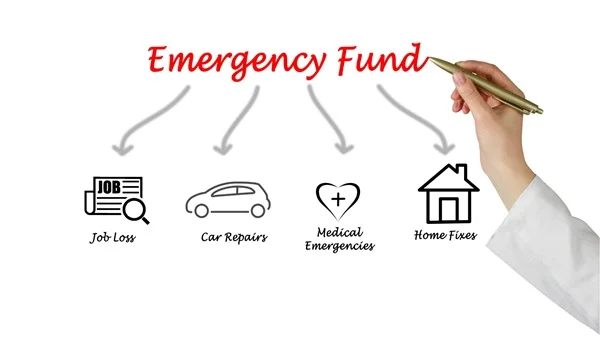
An emergency fund is a cash reserve meant for unplanned and necessary expenses.
It is different from money saved for:
- Buying a car
- Going on vacation
- Buying a house
- Paying school or college fees that are already planned
- Buying a new phone
- Long-term investing
- Retirement
The purpose of an emergency fund is to provide financial support when something unexpected happens.
Examples of Genuine Emergencies
An emergency fund may be useful for:
- Sudden medical expenses
- Job loss
- Temporary loss of business income
- Urgent home repairs
- Essential vehicle repairs
- Emergency travel because of a family situation
- Necessary expenses during a temporary income disruption
The RBI describes an emergency or “rainy day” fund as a cash reserve that can reduce the risk created by a loss or sudden fall in income.
How Much Emergency Fund Should You Have?
A simple starting point is:
Emergency Fund = Monthly Essential Expenses × Number of Months
For many people, 3 to 6 months of essential expenses is a practical target.
| Situation | Possible Starting Target |
| Stable salaried job | 3 months of essential expenses |
| Family with dependants | 4–6 months |
| Single-income household | 4–6 months |
| Freelancer | 6 months or more |
| Self-employed person | 6 months or more |
| Business owner with variable income | 6 months or more |
| Highly uncertain income | 6–12 months may be considered |
These are planning ranges, not mandatory financial rules. RBI specifically recommends at least three months and suggests six months or more where income is less secure or the person is self-employed or running a business.
Calculate Your Emergency Fund Based on Essential Expenses
One common mistake is calculating an emergency fund using your entire monthly spending.
Instead, separate your essential expenses from discretionary spending.
Essential Expenses
These may include:
- Rent or basic housing costs
- Groceries
- Electricity and other essential utilities
- Basic transportation
- School or essential education expenses
- Insurance premiums
- Loan EMIs
- Necessary medicines or healthcare expenses
- Essential family expenses
Non-Essential Expenses
These may include:
- Restaurant spending
- Entertainment
- Vacations
- Shopping
- Premium subscriptions
- Hobbies
- Luxury purchases
During an emergency, some discretionary expenses can potentially be reduced. Therefore, your emergency-fund calculation should primarily focus on the expenses you would still need to pay.
Example: How Much Should a Salaried Person Save?
Suppose your monthly essential expenses are:
| Expense | Monthly Amount |
| Rent | ₹15,000 |
| Groceries | ₹8,000 |
| Utilities | ₹3,000 |
| Transport | ₹4,000 |
| Insurance | ₹2,000 |
| EMI | ₹8,000 |
| Other essential expenses | ₹5,000 |
| Total | ₹45,000 |
Three-Month Emergency Fund
₹45,000 × 3 = ₹1,35,000
Six-Month Emergency Fund
₹45,000 × 6 = ₹2,70,000
So, depending on your circumstances, an emergency-fund target could be between ₹1.35 lakh and ₹2.70 lakh.
What If You Are Self-Employed?
People with variable income may need a larger emergency reserve.
For example, suppose a freelancer’s essential monthly expenses are ₹60,000.
A three-month reserve would be:
₹60,000 × 3 = ₹1.80 lakh
A six-month reserve would be:
₹60,000 × 6 = ₹3.60 lakh
If income is highly unpredictable, you may choose to build a larger reserve after considering your actual financial obligations.
RBI specifically suggests that self-employed people and those with less secure employment consider maintaining six months or more of living expenses.
How to Build an Emergency Fund From Zero
You do not need to have the entire amount available on day one.
Step 1: Calculate Your Monthly Essential Expenses
Review your last few months of spending.
Separate:
Essential expenses
from
Discretionary expenses
Use a realistic average rather than an unusually low month.
Step 2: Set a Target
Start with a three-month target if that is appropriate for your circumstances.
For example:
₹40,000 essential expenses × 3 = ₹1.20 lakh
Once you reach that amount, you can decide whether a larger six-month reserve is appropriate.
Step 3: Open a Separate Savings Account
RBI recommends keeping emergency savings in a separate savings account that is easily accessible.
Keeping the money separate can also make it easier to avoid spending it on everyday purchases.
Step 4: Automate Your Savings
Set up an automatic transfer shortly after receiving your salary or income.
For example:
Monthly income: ₹70,000
Emergency-fund contribution: ₹7,000
At ₹7,000 per month, building a ₹1.40 lakh fund would take approximately 20 months, assuming no withdrawals and ignoring interest.
If you can save ₹10,000 per month, the same target would take about 14 months.
What If You Cannot Save a Large Amount Every Month?
Start with whatever amount you can realistically maintain.
For example:
- ₹2,000 per month
- ₹5,000 per month
- ₹10,000 per month
RBI’s financial education material specifically recommends starting small if you cannot fund the entire emergency reserve immediately and continuing to save from each paycheck.
The important part is creating the habit and gradually increasing the reserve.
Where Should You Keep Your Emergency Fund?
The primary requirement is accessibility.
RBI recommends keeping an emergency fund in a separate savings account that is easily accessible.
For this reason, your emergency fund should generally not be treated like long-term investment capital.
Possible places to consider include:
Savings Account
A savings account provides easy access when you need the money.
You can keep the emergency fund in a separate account rather than mixing it with your regular spending money.
Sweep or Similar Bank Facilities
Some banks offer facilities that automatically move excess savings into deposits while retaining access to funds under specified terms.
Understand the bank’s withdrawal rules before using such a facility.
Short-Term or Liquid Options
Some people consider highly liquid financial products for part of their emergency reserve. However, these may involve different risks, access times or market-related considerations.
The key question is not simply “Where can I earn the highest return?”
It is:
“Can I access the money quickly and predictably when an emergency happens?”
Should You Keep an Emergency Fund in an FD?
A fixed deposit can provide a known return, but accessibility and premature-withdrawal conditions depend on the product and bank.
If you use an FD as part of an emergency reserve, check:
- Premature withdrawal rules
- Applicable interest rate
- Penalties, if any
- How quickly the money can be accessed
- Whether the deposit can be broken partially or only fully
For a pure emergency reserve, liquidity can be more important than maximising returns.
Should You Invest Your Emergency Fund in Stocks or Crypto?
An emergency fund is generally intended to be available when you need it.
Stocks and cryptocurrencies can fluctuate significantly in value. If you need ₹2 lakh during a market decline and your investment has fallen to ₹1.40 lakh, you may have to sell at an unfavourable time.
Therefore, money that you may need for an emergency should not be treated in the same way as long-term investment money.
A simple structure can be:
Emergency fund → Liquidity and safety
Long-term investments → Growth and wealth creation
Emergency Fund vs Savings vs Investments
These three purposes should not be confused.
| Purpose | Main Objective | Typical Time Horizon |
| Emergency fund | Handle unexpected expenses | Immediate/short term |
| Savings | Planned near-term expenses | Short to medium term |
| Investments | Build long-term wealth | Medium to long term |
For example:
₹2 lakh emergency fund → unexpected expenses
₹1 lakh vacation fund → planned holiday
₹5 lakh long-term investment → future financial goal
Keeping separate buckets can make financial planning easier.
What If You Have Debt?
This is where priorities can become more complicated.
If you have high-cost debt, you may want to balance emergency savings with debt repayment.
For example, instead of immediately trying to build a very large emergency fund, you might first create a basic emergency reserve and then focus more aggressively on expensive debt.
However, the right balance depends on:
- Interest rate
- Debt amount
- Income stability
- Number of dependants
- Existing savings
- Job security
- Other financial obligations
The important point is not to leave yourself with zero cash reserves simply because you are trying to repay debt quickly.
How Much Should a Family With Children Save?
A family generally has more financial responsibilities than a single person.
Suppose monthly essential expenses are ₹80,000.
Three Months
₹80,000 × 3 = ₹2.40 lakh
Six Months
₹80,000 × 6 = ₹4.80 lakh
If the household depends primarily on one income, has young children or has an uncertain income source, a larger reserve may provide more financial flexibility.
When Should You Use Your Emergency Fund?
Before withdrawing money, ask:
Is this expense unexpected, necessary and difficult to handle from my regular income?
Appropriate Uses
- Emergency medical expense
- Sudden job loss
- Essential home repair
- Major vehicle repair needed for work
- Emergency family travel
- Temporary income disruption
Usually Not Emergency Uses
- New smartphone
- Vacation
- Festival shopping
- Restaurant bills
- Regular shopping
- Planned electronics purchase
- Investment opportunity
If you repeatedly use the emergency fund for planned expenses, consider creating separate sinking funds for those goals.
What If You Use Your Emergency Fund?
Using the fund during a genuine emergency is exactly what it is designed for.
The next step is to rebuild it.
For example:
Initial emergency fund:
₹2,00,000
Emergency withdrawal:
₹50,000
Remaining:
₹1,50,000
Your next financial priority can be rebuilding the missing ₹50,000 while continuing to manage your regular expenses.
Common Emergency Fund Mistakes
Setting an Unrealistic Target
A ₹10 lakh target may sound ideal, but if you cannot save anything toward it, it is not a useful starting point.
Keeping It in Your Spending Account
Money sitting alongside your regular balance can be easier to spend.
Investing the Entire Emergency Fund
Higher-return investments can come with price fluctuations or reduced liquidity.
Ignoring Inflation and Lifestyle Changes
Your monthly expenses can increase over time. Review your emergency-fund target periodically.
Forgetting About EMIs
If you lose your income, loan EMIs may still continue. Include important debt payments when calculating essential monthly expenses.
A Simple Emergency Fund Plan
You can use this four-stage approach:
Stage 1: Start
Build a small initial cash reserve.
Stage 2: Reach Three Months
Target:
Monthly essential expenses × 3
Stage 3: Review Your Risk
Consider whether you need six months or more because of:
- Self-employment
- Variable income
- Dependants
- Single-income household
- Job instability
- Large fixed obligations
Stage 4: Review Every Year
Recalculate your emergency fund when:
- Rent increases
- Your EMI changes
- Your family grows
- Your income changes
- You change jobs
- Your insurance or medical expenses change
Emergency Fund Calculator
Use this simple formula:
Monthly Essential Expenses × Number of Months = Emergency Fund Target
For example:
₹50,000 × 3 = ₹1.50 lakh
₹50,000 × 6 = ₹3 lakh
If you want a 9-month reserve:
₹50,000 × 9 = ₹4.50 lakh
This calculation gives you a starting target. Your actual requirement should reflect your income stability and financial responsibilities.
Frequently Asked Questions
How much emergency fund should I have in India?
A common starting point is three months of essential expenses. RBI recommends at least three months and suggests six months or more for people with less secure income, including self-employed people and business owners.
Is ₹1 lakh enough for an emergency fund?
It depends on your monthly essential expenses. If your essential expenses are ₹25,000 per month, ₹1 lakh represents four months of expenses. If your expenses are ₹50,000, it represents only two months.
Should I save three or six months of expenses?
Three months can be a starting target. Six months or more may be appropriate when your income is uncertain, you are self-employed or you have significant family responsibilities. RBI specifically recommends six months or more for less-secure income situations.
Should an emergency fund include EMI payments?
If you would still need to pay the EMI during an income disruption, it is sensible to include it when calculating your essential monthly expenses.
Can I keep my emergency fund in a savings account?
Yes. RBI specifically recommends keeping an emergency fund in a separate, easily accessible savings account.
Should I invest my emergency fund in mutual funds?
The emergency portion of your money should prioritise accessibility and suitability for unexpected expenses rather than simply seeking higher returns. Market-linked investments can fluctuate in value.
How can I build an emergency fund with a low salary?
Start with a realistic amount, even if it is small. Automate the contribution where possible, reduce unnecessary expenses and increase the monthly contribution when your income rises.
Conclusion
An emergency fund is one of the simplest ways to create a financial buffer against unexpected expenses and income disruptions.
For most people, a useful starting point is three months of essential expenses. If you are self-employed, run a business, have an uncertain income or have significant financial responsibilities, consider building six months or more. RBI also recommends keeping emergency savings in a separate and easily accessible savings account.
Start with a realistic target rather than waiting until you can save a large amount. Calculate your essential monthly expenses, set a three- or six-month target, automate regular savings and rebuild the fund whenever you use it.
The goal is not to make your emergency fund the highest-return part of your finances. Its main purpose is to ensure that when an unexpected expense arrives, you have money available without immediately depending on expensive debt or selling long-term investments.