Business profit margin is one of the most useful measures for understanding how much money a business actually earns from its sales. It helps business owners track profitability, control costs, set prices and compare performance over time.
However, profit margin is not the same as profit. A business may earn ₹10 lakh in profit, but whether that is a strong margin depends on how much revenue it generated.
For example, ₹10 lakh profit on ₹50 lakh sales gives a 20% margin, while ₹10 lakh profit on ₹2 crore sales gives only a 5% margin.
This article explains the different types of profit margins, their formulas, examples and how to interpret industry benchmarks.
What Is Business Profit Margin?
Profit margin is the percentage of revenue that remains as profit after deducting the relevant costs and expenses.
The basic formula is:
Profit Margin = (Profit ÷ Revenue) × 100
There are different types of profit margins because businesses calculate profit at different stages of the income statement.
The three commonly used measures are:
| Margin Type | What It Measures |
| Gross Profit Margin | Profit after direct costs |
| Operating Profit Margin | Profit after operating expenses |
| Net Profit Margin | Profit after all applicable expenses |
Gross, operating and net margins answer different business questions, so they should not be used interchangeably.
How to Calculate Gross Profit Margin
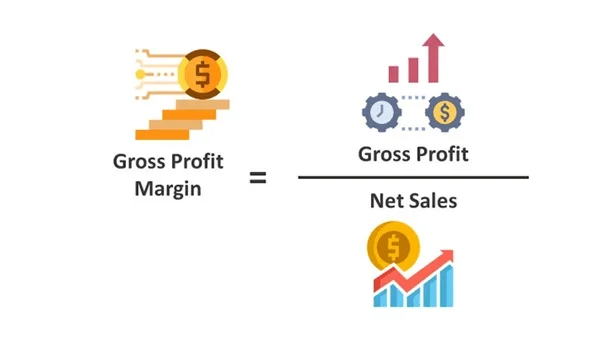
Gross profit is the amount left after deducting the cost of goods sold (COGS) from revenue.
Formula
Gross Profit = Revenue − COGS
Gross Profit Margin = (Gross Profit ÷ Revenue) × 100
COGS can include direct costs associated with producing or acquiring goods, such as raw materials and direct production costs.
Example
Suppose a small manufacturing business has:
- Revenue = ₹20 lakh
- COGS = ₹12 lakh
Gross profit:
₹20 lakh − ₹12 lakh = ₹8 lakh
Gross profit margin:
(₹8 lakh ÷ ₹20 lakh) × 100 = 40%
So, the business has a 40% gross profit margin.
How to Calculate Operating Profit Margin
Operating profit margin considers the costs required to run the business after accounting for direct costs.
These expenses can include:
- Employee salaries
- Rent
- Advertising
- Administrative expenses
- Selling and distribution expenses
- Utilities
- Other operating costs
Formula
Operating Profit = Gross Profit − Operating Expenses
Operating Profit Margin = (Operating Profit ÷ Revenue) × 100
For example, if the business above has a gross profit of ₹8 lakh and operating expenses of ₹4 lakh:
Operating Profit = ₹8 lakh − ₹4 lakh = ₹4 lakh
Operating profit margin:
(₹4 lakh ÷ ₹20 lakh) × 100 = 20%
How to Calculate Net Profit Margin
Net profit margin shows how much profit remains after accounting for the business’s relevant expenses, including operating expenses and other costs such as interest, depreciation and taxes.
Formula
Net Profit = Revenue + Other Income − Total Applicable Expenses
Net Profit Margin = (Net Profit ÷ Revenue) × 100
Net profit margin is often called the bottom-line margin because it reflects the final profit after the relevant expenses have been accounted for.
Example
Suppose:
| Particular | Amount |
| Revenue | ₹20 lakh |
| COGS | ₹12 lakh |
| Operating expenses | ₹4 lakh |
| Interest and other expenses | ₹50,000 |
| Depreciation | ₹50,000 |
| Tax | ₹60,000 |
| Net Profit | ₹2.40 lakh |
Net profit margin:
(₹2.40 lakh ÷ ₹20 lakh) × 100 = 12%
The business therefore earns a 12% net profit margin.
Gross Margin vs Operating Margin vs Net Margin
| Particular | Gross Margin | Operating Margin | Net Margin |
| Direct costs | Included | Included | Included |
| Operating expenses | No | Yes | Yes |
| Interest | No | Generally no | Yes |
| Taxes | No | No | Yes |
| Shows | Product-level profitability | Core operating profitability | Overall profitability |
A business can have a strong gross margin but a much lower net margin if salaries, rent, marketing, interest and other expenses consume a large part of its gross profit.
Business Profit Margin Example
Consider a retail business with annual sales of ₹50 lakh.
Its costs are:
- Purchase cost of goods: ₹30 lakh
- Salaries: ₹5 lakh
- Rent: ₹3 lakh
- Marketing: ₹1 lakh
- Electricity and other expenses: ₹1 lakh
- Interest and other costs: ₹1 lakh
- Tax and other applicable expenses: ₹1.5 lakh
Step 1: Calculate Gross Profit
₹50 lakh − ₹30 lakh = ₹20 lakh
Gross margin:
₹20 lakh ÷ ₹50 lakh × 100 = 40%
Step 2: Calculate Operating Profit
Operating expenses:
₹5 lakh + ₹3 lakh + ₹1 lakh + ₹1 lakh = ₹10 lakh
Operating profit:
₹20 lakh − ₹10 lakh = ₹10 lakh
Operating margin:
₹10 lakh ÷ ₹50 lakh × 100 = 20%
Step 3: Calculate Net Profit
After deducting the remaining ₹2.5 lakh of interest, other costs and taxes:
Net Profit = ₹7.5 lakh
Net profit margin:
₹7.5 lakh ÷ ₹50 lakh × 100 = 15%
So the business has:
- 40% gross margin
- 20% operating margin
- 15% net margin
How to Calculate Profit Margin on a Product
For individual products, a simple margin calculation can help with pricing decisions.
Suppose you purchase a product for ₹600 and sell it for ₹1,000.
Profit:
₹1,000 − ₹600 = ₹400
Profit margin:
₹400 ÷ ₹1,000 × 100 = 40%
Therefore, the product has a 40% margin before other business expenses.
Profit Margin vs Markup
These two terms are often confused.
| Selling Price | Cost | Profit | Margin | Markup |
| ₹1,000 | ₹600 | ₹400 | 40% | 66.67% |
Margin is calculated using selling price/revenue as the denominator.
Markup is calculated using cost as the denominator.
Markup formula:
Markup = (Profit ÷ Cost) × 100
This difference is important when setting product prices.
How to Calculate Selling Price for a Desired Margin
Suppose your product costs ₹800 and you want a 25% profit margin.
The formula is:
Selling Price = Cost ÷ (1 − Desired Margin)
Therefore:
₹800 ÷ (1 − 0.25) = ₹1,066.67
So, you would need a selling price of approximately ₹1,067 to achieve a 25% margin before considering other applicable costs.
Simply adding 25% to ₹800 gives ₹1,000, but that represents a 20% margin, not a 25% margin.
What Is a Good Profit Margin for a Business?
There is no single profit margin that can be called good for every business.
Margins vary substantially depending on:
- Industry
- Business model
- Competition
- Product category
- Operating costs
- Location
- Pricing power
- Scale of operations
- Capital requirements
For example, a wholesale business may operate with a relatively low margin but high sales volume, while a specialised service business may have a higher margin and lower operating volume.
Therefore, comparing your margin with an unrelated industry can give a misleading picture.
Industry Profit Margin Benchmarks
Industry benchmarks should be treated as reference points rather than universal targets.
Illustrative ranges sometimes used for planning are:
| Business Type | Typical Margin Pattern |
| Wholesale | Generally lower margins, higher volume |
| Grocery/FMCG retail | Generally low margins with high turnover |
| Restaurants | Moderate gross margins but significant operating costs |
| Manufacturing | Varies substantially by product and scale |
| Professional services | Often higher gross margins because direct product costs are lower |
| Software/SaaS | Potentially high gross margins but significant technology and marketing costs |
| E-commerce | Margin depends heavily on product, discounts, logistics and returns |
These figures should not be treated as fixed industry standards. Even two businesses in the same industry can have very different margins because their cost structures, pricing and business models differ.
For meaningful benchmarking, compare your business with similar companies or your own historical performance rather than relying on one generic percentage. Profitability ratios are commonly used to compare performance across accounting periods and businesses.
How to Improve Business Profit Margin
If your margin is falling, look at both revenue and expenses instead of focusing only on sales.
- Review Product Pricing
Check whether your selling price adequately covers:
- Product cost
- Labour
- Packaging
- Delivery
- Payment charges
- Overheads
- Desired profit
- Reduce Unnecessary Costs
Review recurring expenses such as:
- Rent
- Software subscriptions
- Advertising
- Logistics
- Office expenses
- Bank and payment charges
- Reduce Wastage
Inventory damage, expired stock, production waste and unnecessary returns can reduce margins.
- Focus on Higher-Margin Products
Identify which products or services generate better contribution after their associated costs.
- Increase Average Order Value
Businesses can sometimes improve profitability by increasing the value of each customer transaction through bundles, complementary products or higher-value services.
- Monitor Margins Regularly
Calculate margins monthly or quarterly rather than checking them only at the end of the financial year.
Common Mistakes While Calculating Profit Margin
Small businesses often make mistakes such as:
- Confusing markup with margin
- Ignoring indirect expenses
- Using sales instead of net sales where appropriate
- Not accounting for returns and discounts
- Excluding delivery or packaging costs
- Treating GST collected from customers as business revenue
- Comparing margins with unrelated industries
- Looking only at gross margin and ignoring net margin
A consistent accounting method is important because changing the costs included in the calculation can make month-to-month comparisons misleading.
Why Profit Margin Matters for Small Businesses
Profit margin can help a business owner understand whether sales are translating into sufficient profit.
It can be used for:
- Pricing decisions
- Cost control
- Product selection
- Business planning
- Budgeting
- Performance comparison
- Loan and financial discussions
- Identifying declining profitability
For example, revenue may increase by 20% while profit margin falls because costs increased faster than sales. Looking only at revenue would hide this change.
Frequently Asked Questions
What is the basic profit margin formula?
Profit Margin = (Profit ÷ Revenue) × 100
The exact profit figure depends on whether you are calculating gross, operating or net profit margin.
Is a 20% profit margin good?
A 20% margin cannot be judged in isolation. Its significance depends on the industry, business model, operating costs, capital requirements and other factors.
What is the difference between profit and profit margin?
Profit is the actual amount earned after relevant costs and expenses.
Profit margin expresses that profit as a percentage of revenue.
Can a business have high sales but low profit margin?
Yes. A business can generate substantial sales while having a low margin if product costs, salaries, rent, discounts, logistics or other expenses are high.
Should GST be included while calculating profit margin?
The treatment depends on whether GST is recoverable and how the business maintains its books. For a registered business collecting GST from customers, GST collected is generally a tax liability rather than business profit. Use the appropriate accounting treatment consistently.
Conclusion
Calculating business profit margin helps you understand how efficiently your business converts revenue into profit.
The basic formula is:
Profit Margin = (Profit ÷ Revenue) × 100
But businesses should look beyond one percentage. Gross margin helps assess direct product costs, operating margin shows the profitability of core operations, and net margin reflects the profit remaining after the relevant expenses.
For small businesses, the most useful approach is to track margins regularly, compare them with previous periods and benchmark against businesses with a similar model. This provides a more meaningful picture of profitability than looking at sales or profit alone.