Ghaziabad Industrial Area is an important industrial and manufacturing hub in Uttar Pradesh and forms a major part of the Delhi-NCR business network. Located close to Delhi, the city has developed a strong industrial base supported by highways, railways, metro connectivity, warehouses, skilled labour and access to a large consumer market.
Ghaziabad is not limited to one industrial estate. It has several important industrial clusters, including Sahibabad Industrial Area, Bulandshahr Road Industrial Area, Meerut Road Industrial Area and other manufacturing pockets. These areas support a wide range of businesses, from engineering and automobile components to electrical products, plastics, packaging, chemicals and logistics.
Its strategic location makes Ghaziabad Industrial Area suitable for manufacturers, wholesalers, warehouse operators, logistics companies, MSMEs and investors looking for industrial or commercial property in the Delhi-NCR region.
Ghaziabad Industrial Area Location & Address
Ghaziabad is located in western Uttar Pradesh and shares a close border with Delhi. Its position makes it an important gateway between Delhi and several cities of western Uttar Pradesh.
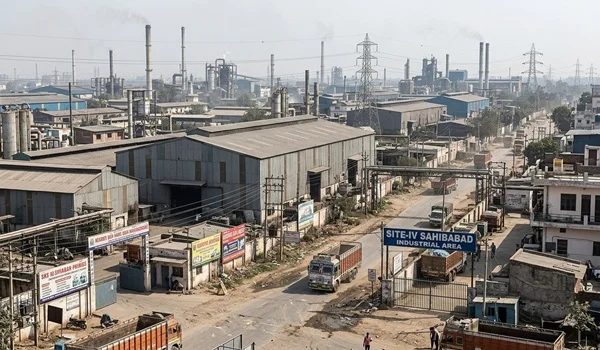
The term Ghaziabad Industrial Area can refer to different industrial clusters across the city rather than one single industrial estate.
| Location Detail | Information |
| Industrial Hub | Ghaziabad Industrial Area |
| City | Ghaziabad |
| State | Uttar Pradesh |
| Region | Delhi-NCR |
| Major Industrial Areas | Sahibabad, Bulandshahr Road, Meerut Road and surrounding clusters |
| Nearby Metro Areas | Shaheed Sthal, Hindon River, Arthala and other stations depending on location |
| Major Highways | NH 9, Delhi-Meerut Expressway and Eastern Peripheral Expressway connections |
| Nearby Cities | Delhi, Noida, Greater Noida, Meerut and Hapur |
| Common PIN Codes | Vary according to the industrial locality |
The exact PIN code, nearest metro station and road distance depend on the particular industrial area or property.
Major Industrial Areas in Ghaziabad
Ghaziabad has several established industrial clusters. Some of the most significant include:
Sahibabad Industrial Area
Sahibabad Industrial Area is one of the best-known industrial zones in the Delhi-NCR region. It is close to Delhi and has a strong presence of engineering, manufacturing, electrical, automobile and industrial businesses.
Bulandshahr Road Industrial Area
This industrial belt has developed around the southern side of Ghaziabad and supports manufacturing, engineering, fabrication, packaging and other industrial activities.
Meerut Road Industrial Area
The Meerut Road corridor contains manufacturing units, engineering businesses, warehouses and industrial support services. Its road connectivity makes it useful for businesses involved in transportation and distribution.
Other Industrial Clusters
Several smaller industrial pockets and commercial-industrial areas are spread across Ghaziabad. Their business profile varies depending on location, road access and surrounding development.
How to Reach Ghaziabad Industrial Area
By Metro
Ghaziabad has good connectivity with the Delhi Metro network.
The Red Line extends from Delhi towards Ghaziabad and provides access to important stations such as Shaheed Sthal, Hindon River and Arthala.
The nearest metro station depends on which industrial cluster you are visiting. Sahibabad, Meerut Road and Bulandshahr Road areas can have different convenient stations.
For employees travelling daily, metro connectivity can be a major advantage because it reduces dependence on private vehicles.
By Road
Road transport is one of the biggest strengths of Ghaziabad Industrial Area.
The city is connected to Delhi and other NCR markets through major roads and expressways, including:
- National Highway 9
- Delhi-Meerut Expressway
- Eastern Peripheral Expressway
- Meerut Road
- GT Road
- Bulandshahr Road
- Delhi-Ghaziabad roads
These routes are important for trucks, delivery vehicles, employees and commercial transport.
By Bus
UPSRTC buses, local buses, private buses, shared autos and other public transport options connect Ghaziabad with Delhi and nearby Uttar Pradesh cities.
Local transport is available around major industrial and commercial areas, although the frequency can vary by locality and time of day.
By Railway
Ghaziabad Railway Station is one of the important railway stations serving the region.
The city has strong railway connectivity with Delhi, Uttar Pradesh and other parts of northern India. Several industrial businesses benefit from railway connectivity for employee travel and movement of goods.
Other railway stations may be more convenient depending on the particular industrial area.
By Airport
Indira Gandhi International Airport in Delhi is the primary major airport serving Ghaziabad.
The airport can be reached by road through Delhi and NCR road networks. Travel time varies depending on the industrial location and traffic conditions.
Nearest Transport Facilities
| Facility | Main Option |
| Metro | Red Line stations in Ghaziabad |
| Major Metro Station | Shaheed Sthal |
| Railway Station | Ghaziabad Railway Station |
| Airport | Indira Gandhi International Airport |
| Major Highway | NH 9 |
| Expressway | Delhi-Meerut Expressway |
| Regional Expressway | Eastern Peripheral Expressway |
| Local Transport | Buses, autos, taxis and cabs |
Exact distances should be checked according to the individual industrial unit because Ghaziabad has several separate industrial clusters.
Major Industries in Ghaziabad Industrial Area
Ghaziabad has a diversified industrial economy. The city is particularly known for engineering and manufacturing activities.
Major sectors include:
- Engineering
- Automobile components
- Electrical equipment
- Electronics
- Metal fabrication
- Steel products
- Machinery manufacturing
- Plastics
- Packaging
- Chemicals
- Pharmaceuticals
- Food processing
- Furniture
- Construction materials
- Hardware
- Logistics
- Warehousing
- Printing and paper products
The presence of supporting suppliers makes the city useful for MSMEs and manufacturing businesses.
Engineering and metal-related businesses are particularly important because the region has a long-established manufacturing ecosystem.
Top Companies & Manufacturing Units
Ghaziabad has numerous established manufacturing businesses, MSMEs and industrial units.
Some well-known industrial names associated with the broader Ghaziabad region include:
- Bharat Electronics-related industrial operations in the wider NCR region
- Dixon Technologies-related manufacturing ecosystem
- Rathi Steel and related steel businesses
- various automobile component manufacturers
- electrical equipment manufacturers
- engineering and machinery companies
However, company operations, registered addresses and factory locations can change. Therefore, a particular company should be verified before mentioning it as a current occupant of a specific industrial area.
The larger industrial ecosystem includes:
- Auto-component manufacturers
- Steel and metal companies
- Electrical manufacturers
- Machine manufacturers
- Packaging companies
- Industrial equipment suppliers
- Plastic manufacturers
- Logistics businesses
- Warehousing operators
Warehouses, Industrial Sheds & Commercial Spaces
Ghaziabad has a substantial market for industrial property.
Businesses can find different types of commercial and industrial premises, including:
- Industrial plots
- Factory buildings
- Industrial sheds
- Warehouses
- Godowns
- Workshops
- Commercial offices
- Distribution centres
- Logistics facilities
- Small manufacturing units
The availability and price of industrial property depend on factors such as location, road width, plot size, building condition, power supply, loading facilities and proximity to major highways.
Sahibabad and other established industrial areas may command different property values compared with developing industrial pockets.
Companies should conduct proper property and legal verification before purchasing or leasing an industrial premises.
Infrastructure & Facilities
Roads and Logistics
Ghaziabad’s road network is one of its major business advantages.
The city connects Delhi with western Uttar Pradesh and provides access to major regional highways and expressways. This is particularly useful for manufacturing and logistics companies.
Businesses transporting heavy goods should consider road congestion and truck movement restrictions while selecting their premises.
Electricity
Reliable electricity is essential for industrial operations.
Established industrial areas generally have access to commercial and industrial power infrastructure. However, businesses using heavy machinery should verify the sanctioned load and power availability of the individual property.
Water Supply
Water availability depends on the industrial locality and individual property.
Industries requiring large quantities of water should verify supply arrangements, storage facilities and applicable permissions before beginning operations.
Internet and Communication
Broadband, mobile networks and commercial internet services are available throughout Ghaziabad.
Businesses can generally arrange dedicated connectivity depending on the location and service-provider infrastructure.
Parking and Loading
Parking and loading facilities vary between industrial properties.
Before renting or buying a factory or warehouse, businesses should check:
- Truck entry
- Loading and unloading space
- Parking capacity
- Road width
- Gate size
- Vehicle turning area
- Internal movement space
Security
Industrial properties may have security guards, boundary walls, gated entry and CCTV systems.
Security standards vary from one industrial complex to another.
Investment Opportunities
Ghaziabad Industrial Area offers opportunities for businesses and investors interested in industrial and commercial properties.
Potential investment options include:
- Industrial plots
- Manufacturing units
- Warehouses
- Factory buildings
- Industrial sheds
- Logistics facilities
- Commercial offices
- Rental industrial properties
Its proximity to Delhi provides a major location advantage. Businesses can serve customers across Delhi-NCR while operating from a comparatively large industrial ecosystem.
The city’s connectivity with Noida, Greater Noida, Meerut, Hapur and other markets also supports distribution and manufacturing activities.
Before investing, buyers should verify:
- Property ownership
- Land-use permissions
- Industrial zoning
- Building approvals
- Electricity connection
- Water supply
- Fire-safety requirements
- Road access
- Existing lease arrangements
- Applicable government permissions
Banks & ATMs
Banks and ATMs are widely available around Ghaziabad’s major industrial and commercial zones.
Businesses can access:
- Current accounts
- Business loans
- Working-capital finance
- Cash-management services
- Digital banking
- Merchant banking services
- ATM facilities
The nearest bank depends on the specific industrial cluster.
Hospitals & Medical Facilities
Ghaziabad has hospitals, clinics, pharmacies, diagnostic centres and emergency medical facilities across major residential and commercial areas.
Industrial employers should ensure that employees have access to first-aid arrangements and emergency contacts.
Factories involving heavy machinery, welding, chemicals or other industrial processes should also follow appropriate workplace safety procedures.
Petrol Pumps
Petrol pumps are available along major roads throughout Ghaziabad.
They are particularly important for businesses operating:
- Trucks
- Delivery vans
- Company vehicles
- Logistics fleets
- Employee transport
- Commercial vehicles
Businesses with frequent transportation requirements should consider proximity to fuel stations when selecting an industrial property.
Why Businesses Choose Ghaziabad Industrial Area
There are several reasons businesses choose Ghaziabad for manufacturing and industrial operations.
- Proximity to Delhi
Ghaziabad’s location next to Delhi provides access to a large consumer and business market.
- Strong Industrial Base
The city has a long-established manufacturing ecosystem with numerous MSMEs and supporting industries.
- Good Road Connectivity
Highways and expressways connect Ghaziabad with important NCR and northern Indian markets.
- Workforce Availability
The surrounding urban and semi-urban areas provide a large workforce for manufacturing, logistics and service businesses.
- Supplier Network
Manufacturers can find engineering, metal, electrical, packaging and other supporting businesses within the wider industrial ecosystem.
- Logistics Advantage
The city’s location makes it useful for businesses involved in warehousing, distribution and transportation.
- Multiple Industrial Clusters
Businesses can select between different industrial pockets depending on their budget, required space and connectivity needs.
Future Development & Growth Prospects
Ghaziabad’s industrial future is closely connected with the wider growth of Delhi-NCR.
Improved expressway connectivity, metro expansion, road development and increasing demand for warehousing are likely to support industrial activity.
The Delhi-Meerut Expressway has strengthened regional connectivity, while the broader NCR transport network continues to evolve.
Future opportunities may be particularly relevant for:
- Logistics
- Warehousing
- E-commerce distribution
- Automobile components
- Engineering
- Electrical manufacturing
- Packaging
- Industrial machinery
- General manufacturing
At the same time, investors should consider traffic, environmental requirements, land-use regulations and infrastructure conditions before making long-term decisions.
Frequently Asked Questions
Where is Ghaziabad Industrial Area located?
Ghaziabad Industrial Area refers broadly to several industrial clusters across Ghaziabad, Uttar Pradesh. Important areas include Sahibabad Industrial Area, Bulandshahr Road Industrial Area and Meerut Road Industrial Area.
Which metro station is nearest to Ghaziabad Industrial Area?
The nearest metro station depends on the industrial cluster. Red Line stations such as Shaheed Sthal, Hindon River and Arthala serve different parts of Ghaziabad.
Which industries are found in Ghaziabad Industrial Area?
Major sectors include engineering, automobile components, electrical equipment, metal products, plastics, packaging, machinery, chemicals, pharmaceuticals, food processing, logistics and warehousing.
Are warehouses available in Ghaziabad Industrial Area?
Yes, warehouses, godowns, industrial sheds and factory premises are available across different industrial clusters. Availability, rent and property prices vary by location and size.
Is Ghaziabad suitable for industrial investment?
Ghaziabad can be suitable for industrial investment because of its proximity to Delhi, strong manufacturing base, road connectivity and access to the wider NCR market. Investors should conduct legal and technical due diligence before purchasing property.
What is the PIN code of Ghaziabad Industrial Area?
There is no single PIN code for all industrial areas of Ghaziabad. The correct PIN code depends on the specific industrial locality and property address.
Which airport is nearest to Ghaziabad?
Indira Gandhi International Airport in Delhi is the primary major airport serving Ghaziabad. The actual travel time depends on the industrial area’s location and traffic conditions.
Conclusion
Ghaziabad Industrial Area is an important manufacturing and commercial hub within Delhi-NCR. Its multiple industrial clusters, including Sahibabad, Bulandshahr Road and Meerut Road, support a broad range of businesses such as engineering, automobile components, electrical equipment, metal products, plastics, packaging, machinery, logistics and warehousing.
The city’s proximity to Delhi, strong road and railway network, access to major highways and availability of industrial property make it attractive for manufacturers, MSMEs, warehouse operators and investors. Its position within the growing NCR economy also provides opportunities for logistics and distribution businesses.
For anyone planning to start or expand a business in Ghaziabad, the key is to select the right industrial cluster based on road connectivity, workforce availability, property cost, power supply, loading facilities and permitted land use. A detailed property and regulatory check should always be completed before making a final investment decision.